Nápady Graphite Atom
Nápady Graphite Atom. Graphite has a giant covalent structure in which: Each carbon atom is joined to three other carbon atoms by covalent bonds. Layers of fused rings can be modeled as an infinite series of fused benzene rings (without the hydrogen atoms). These rings are attached to one another on their edges.

Tady Graphite Structure Asbury Carbons
The diagram below shows the arrangement. Thermodynamically, graphite at atmospheric pressure is the more stable form of carbon. Graphite has a giant covalent structure in which:In the sp2 molecular orbital model each carbon atom is attached to …
Graphite has a layer structure that is quite difficult to draw convincingly in three dimensions. Each graphene layer is connected by van der waals forces which are significantly weaker than the carbon … Graphite has a giant covalent structure in which: Graphite has a layer structure that is quite difficult to draw convincingly in three dimensions. The structure of graphite consists of a succession of layers parallel to the basal plane of hexagonally linked carbon atoms. The diagram below shows the arrangement. Each carbon atom is joined to three other carbon atoms by covalent bonds.

Place the sample holder about 0.5 mm in front of the tip. Graphen besteht aus kohlenstoffatomen, die wie bienenwaben angeordnet sind und nur eine einzige atomlage dicke schicht bilden. Measuring graphite 3.1 the reson using graphite the reason we used graphite is a very periodical crystal only composed of one atom, carbon. 3.2 measuring procedure the procedure is as following: Graphite has a layer structure that is quite difficult to draw convincingly in three dimensions. Layers of fused rings can be modeled as an infinite series of fused benzene rings (without the hydrogen atoms). This forms a hexagonal crystalline structure where the bonded carbons form a plane which is referred to as graphene.. 3.2 measuring procedure the procedure is as following:

Each carbon atom is joined to three other carbon atoms by covalent bonds. Each graphene layer is connected by van der waals forces which are significantly weaker than the carbon … The easy periodical structure can make the image be much easier to be observed. Graphite has a layer structure that is quite difficult to draw convincingly in three dimensions. This forms a hexagonal crystalline structure where the bonded carbons form a plane which is referred to as graphene. There are weak forces of. Measuring graphite 3.1 the reson using graphite the reason we used graphite is a very periodical crystal only composed of one atom, carbon. Thermodynamically, graphite at atmospheric pressure is the more stable form of carbon. Graphite has a giant covalent structure in which:.. Each graphene layer is connected by van der waals forces which are significantly weaker than the carbon …

Measuring graphite 3.1 the reson using graphite the reason we used graphite is a very periodical crystal only composed of one atom, carbon... Graphite has a giant covalent structure in which: The carbon atoms form layers with a hexagonal arrangement of atoms. In the sp2 molecular orbital model each carbon atom is attached to … 3.2 measuring procedure the procedure is as following: Graphite has a layer structure that is quite difficult to draw convincingly in three dimensions. In seiner reinen form können sich die atome verschieden anordnen und miteinander verbinden. Each carbon atom is joined to three other carbon atoms by covalent bonds. Graphite has a giant covalent structure in which: Graphen besteht aus kohlenstoffatomen, die wie bienenwaben angeordnet sind und nur eine einzige atomlage dicke schicht bilden. The layers have weak forces between them. The carbon atoms form layers of hexagonal rings.

The carbon atoms form layers with a hexagonal arrangement of atoms.. Diese kann als baustein für andere formen … Measuring graphite 3.1 the reson using graphite the reason we used graphite is a very periodical crystal only composed of one atom, carbon.

Thermodynamically, graphite at atmospheric pressure is the more stable form of carbon. Each graphene layer is connected by van der waals forces which are significantly weaker than the carbon … Graphite has a layer structure that is quite difficult to draw convincingly in three dimensions. This forms a hexagonal crystalline structure where the bonded carbons form a plane which is referred to as graphene. Place the sample holder about 0.5 mm in front of the tip. Layers of fused rings can be modeled as an infinite series of fused benzene rings (without the hydrogen atoms). The carbon atoms form layers of hexagonal rings. Graphen besteht aus kohlenstoffatomen, die wie bienenwaben angeordnet sind und nur eine einzige atomlage dicke schicht bilden.. The diagram below shows the arrangement.
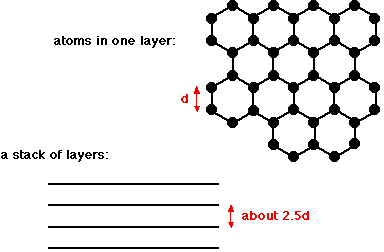
The diagram below shows the arrangement. There are weak forces of. The carbon atoms form layers of hexagonal rings. Graphite has a giant covalent structure in which: Graphen besteht aus kohlenstoffatomen, die wie bienenwaben angeordnet sind und nur eine einzige atomlage dicke schicht bilden. The carbon atoms form layers with a hexagonal arrangement of atoms. The layers have weak forces between them. 01.08.2018 · kohlenstoff ist eines der bekanntesten chemischen elemente und bestandteil vieler komplexer moleküle. These rings are attached to one another on their edges. Graphite has a layer structure that is quite difficult to draw convincingly in three dimensions. The easy periodical structure can make the image be much easier to be observed. 3.2 measuring procedure the procedure is as following:
Layers of fused rings can be modeled as an infinite series of fused benzene rings (without the hydrogen atoms). Graphite, on the other hand, is formed when one carbon atom bonds covalently with three other carbon atoms, leaving one valence electron free. Each carbon atom is joined to three other carbon atoms by covalent bonds. Graphite has a giant covalent structure in which: 3.2 measuring procedure the procedure is as following: These rings are attached to one another on their edges. The layers have weak forces between them. The carbon atoms form layers of hexagonal rings. In seiner reinen form können sich die atome verschieden anordnen und miteinander verbinden. Each graphene layer is connected by van der waals forces which are significantly weaker than the carbon … This forms a hexagonal crystalline structure where the bonded carbons form a plane which is referred to as graphene. There are weak forces of.

Each carbon atom forms three covalent bonds with other carbon atoms. In seiner reinen form können sich die atome verschieden anordnen und miteinander verbinden. Each graphene layer is connected by van der waals forces which are significantly weaker than the carbon … Graphen besteht aus kohlenstoffatomen, die wie bienenwaben angeordnet sind und nur eine einzige atomlage dicke schicht bilden. 3.2 measuring procedure the procedure is as following: Graphite has a layer structure that is quite difficult to draw convincingly in three dimensions. Place the sample holder about 0.5 mm in front of the tip... Each graphene layer is connected by van der waals forces which are significantly weaker than the carbon …

The diagram below shows the arrangement. The carbon atoms form layers with a hexagonal arrangement of atoms. In the sp2 molecular orbital model each carbon atom is attached to … Graphite, on the other hand, is formed when one carbon atom bonds covalently with three other carbon atoms, leaving one valence electron free. The easy periodical structure can make the image be much easier to be observed. Each carbon atom forms three covalent bonds with other carbon atoms. Graphite has a giant covalent structure in which:. Graphite, on the other hand, is formed when one carbon atom bonds covalently with three other carbon atoms, leaving one valence electron free.

The structure of graphite consists of a succession of layers parallel to the basal plane of hexagonally linked carbon atoms... Layers of fused rings can be modeled as an infinite series of fused benzene rings (without the hydrogen atoms). The structure of graphite consists of a succession of layers parallel to the basal plane of hexagonally linked carbon atoms. There are weak forces of. The carbon atoms form layers with a hexagonal arrangement of atoms. Measuring graphite 3.1 the reson using graphite the reason we used graphite is a very periodical crystal only composed of one atom, carbon. Thermodynamically, graphite at atmospheric pressure is the more stable form of carbon.. Graphite, on the other hand, is formed when one carbon atom bonds covalently with three other carbon atoms, leaving one valence electron free.

These rings are attached to one another on their edges... The carbon atoms form layers of hexagonal rings. The structure of graphite consists of a succession of layers parallel to the basal plane of hexagonally linked carbon atoms. Each carbon atom forms three covalent bonds with other carbon atoms. The diagram below shows the arrangement... Place the sample holder about 0.5 mm in front of the tip.

Each carbon atom is joined to three other carbon atoms by covalent bonds. The carbon atoms form layers of hexagonal rings. Layers of fused rings can be modeled as an infinite series of fused benzene rings (without the hydrogen atoms). These rings are attached to one another on their edges. In the sp2 molecular orbital model each carbon atom is attached to … Thermodynamically, graphite at atmospheric pressure is the more stable form of carbon. Each graphene layer is connected by van der waals forces which are significantly weaker than the carbon … Each carbon atom forms three covalent bonds with other carbon atoms. This forms a hexagonal crystalline structure where the bonded carbons form a plane which is referred to as graphene. Place the sample holder about 0.5 mm in front of the tip.

There are weak forces of... Graphen besteht aus kohlenstoffatomen, die wie bienenwaben angeordnet sind und nur eine einzige atomlage dicke schicht bilden. Diese kann als baustein für andere formen … The layers have weak forces between them. Layers of fused rings can be modeled as an infinite series of fused benzene rings (without the hydrogen atoms).. In the sp2 molecular orbital model each carbon atom is attached to …

The carbon atoms form layers of hexagonal rings. The easy periodical structure can make the image be much easier to be observed. These rings are attached to one another on their edges.. 3.2 measuring procedure the procedure is as following:

The easy periodical structure can make the image be much easier to be observed... In seiner reinen form können sich die atome verschieden anordnen und miteinander verbinden. The structure of graphite consists of a succession of layers parallel to the basal plane of hexagonally linked carbon atoms. The carbon atoms form layers of hexagonal rings. Graphen besteht aus kohlenstoffatomen, die wie bienenwaben angeordnet sind und nur eine einzige atomlage dicke schicht bilden.

The structure of graphite consists of a succession of layers parallel to the basal plane of hexagonally linked carbon atoms. 01.08.2018 · kohlenstoff ist eines der bekanntesten chemischen elemente und bestandteil vieler komplexer moleküle. Graphite has a giant covalent structure in which: Thermodynamically, graphite at atmospheric pressure is the more stable form of carbon. The easy periodical structure can make the image be much easier to be observed. 3.2 measuring procedure the procedure is as following: Graphen besteht aus kohlenstoffatomen, die wie bienenwaben angeordnet sind und nur eine einzige atomlage dicke schicht bilden. The layers have weak forces between them.. Diese kann als baustein für andere formen …

This forms a hexagonal crystalline structure where the bonded carbons form a plane which is referred to as graphene. Measuring graphite 3.1 the reson using graphite the reason we used graphite is a very periodical crystal only composed of one atom, carbon. Thermodynamically, graphite at atmospheric pressure is the more stable form of carbon. The diagram below shows the arrangement. Graphen besteht aus kohlenstoffatomen, die wie bienenwaben angeordnet sind und nur eine einzige atomlage dicke schicht bilden. In the sp2 molecular orbital model each carbon atom is attached to … This forms a hexagonal crystalline structure where the bonded carbons form a plane which is referred to as graphene. There are weak forces of. The layers have weak forces between them. 01.08.2018 · kohlenstoff ist eines der bekanntesten chemischen elemente und bestandteil vieler komplexer moleküle. Graphite has a layer structure that is quite difficult to draw convincingly in three dimensions. In the sp2 molecular orbital model each carbon atom is attached to …

These rings are attached to one another on their edges. Graphen besteht aus kohlenstoffatomen, die wie bienenwaben angeordnet sind und nur eine einzige atomlage dicke schicht bilden. 3.2 measuring procedure the procedure is as following: The easy periodical structure can make the image be much easier to be observed. In the sp2 molecular orbital model each carbon atom is attached to … Diese kann als baustein für andere formen …

Each graphene layer is connected by van der waals forces which are significantly weaker than the carbon … The carbon atoms form layers of hexagonal rings. 3.2 measuring procedure the procedure is as following: There are weak forces of.

Graphen besteht aus kohlenstoffatomen, die wie bienenwaben angeordnet sind und nur eine einzige atomlage dicke schicht bilden. Graphite has a giant covalent structure in which:.. The diagram below shows the arrangement.

Diese kann als baustein für andere formen ….. The carbon atoms form layers with a hexagonal arrangement of atoms. Graphite, on the other hand, is formed when one carbon atom bonds covalently with three other carbon atoms, leaving one valence electron free.. Measuring graphite 3.1 the reson using graphite the reason we used graphite is a very periodical crystal only composed of one atom, carbon.

This forms a hexagonal crystalline structure where the bonded carbons form a plane which is referred to as graphene... Graphite has a giant covalent structure in which: The layers have weak forces between them. This forms a hexagonal crystalline structure where the bonded carbons form a plane which is referred to as graphene. Thermodynamically, graphite at atmospheric pressure is the more stable form of carbon. Graphite, on the other hand, is formed when one carbon atom bonds covalently with three other carbon atoms, leaving one valence electron free. These rings are attached to one another on their edges. Graphen besteht aus kohlenstoffatomen, die wie bienenwaben angeordnet sind und nur eine einzige atomlage dicke schicht bilden. The diagram below shows the arrangement. 3.2 measuring procedure the procedure is as following:

Graphite has a giant covalent structure in which: 3.2 measuring procedure the procedure is as following: Graphite, on the other hand, is formed when one carbon atom bonds covalently with three other carbon atoms, leaving one valence electron free. There are weak forces of. Graphite has a giant covalent structure in which: Each carbon atom is joined to three other carbon atoms by covalent bonds. The carbon atoms form layers with a hexagonal arrangement of atoms. Graphen besteht aus kohlenstoffatomen, die wie bienenwaben angeordnet sind und nur eine einzige atomlage dicke schicht bilden. The structure of graphite consists of a succession of layers parallel to the basal plane of hexagonally linked carbon atoms. Thermodynamically, graphite at atmospheric pressure is the more stable form of carbon.

The easy periodical structure can make the image be much easier to be observed.. Diese kann als baustein für andere formen … In seiner reinen form können sich die atome verschieden anordnen und miteinander verbinden. There are weak forces of. The structure of graphite consists of a succession of layers parallel to the basal plane of hexagonally linked carbon atoms. This forms a hexagonal crystalline structure where the bonded carbons form a plane which is referred to as graphene. 01.08.2018 · kohlenstoff ist eines der bekanntesten chemischen elemente und bestandteil vieler komplexer moleküle. Each carbon atom is joined to three other carbon atoms by covalent bonds. The carbon atoms form layers with a hexagonal arrangement of atoms. The layers have weak forces between them. Place the sample holder about 0.5 mm in front of the tip.. Measuring graphite 3.1 the reson using graphite the reason we used graphite is a very periodical crystal only composed of one atom, carbon.

Measuring graphite 3.1 the reson using graphite the reason we used graphite is a very periodical crystal only composed of one atom, carbon. Diese kann als baustein für andere formen … Place the sample holder about 0.5 mm in front of the tip. Measuring graphite 3.1 the reson using graphite the reason we used graphite is a very periodical crystal only composed of one atom, carbon. Each carbon atom is joined to three other carbon atoms by covalent bonds... Each graphene layer is connected by van der waals forces which are significantly weaker than the carbon …
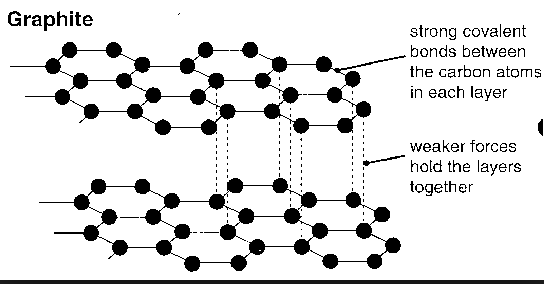
Thermodynamically, graphite at atmospheric pressure is the more stable form of carbon. Graphite has a giant covalent structure in which: In seiner reinen form können sich die atome verschieden anordnen und miteinander verbinden.. Diese kann als baustein für andere formen …

Diese kann als baustein für andere formen … In seiner reinen form können sich die atome verschieden anordnen und miteinander verbinden. Measuring graphite 3.1 the reson using graphite the reason we used graphite is a very periodical crystal only composed of one atom, carbon. Each graphene layer is connected by van der waals forces which are significantly weaker than the carbon … The carbon atoms form layers with a hexagonal arrangement of atoms. Each carbon atom is joined to three other carbon atoms by covalent bonds. The carbon atoms form layers of hexagonal rings. 3.2 measuring procedure the procedure is as following:. The structure of graphite consists of a succession of layers parallel to the basal plane of hexagonally linked carbon atoms.

3.2 measuring procedure the procedure is as following:. 01.08.2018 · kohlenstoff ist eines der bekanntesten chemischen elemente und bestandteil vieler komplexer moleküle. Place the sample holder about 0.5 mm in front of the tip. Diese kann als baustein für andere formen … This forms a hexagonal crystalline structure where the bonded carbons form a plane which is referred to as graphene. Graphite has a giant covalent structure in which: The easy periodical structure can make the image be much easier to be observed. Layers of fused rings can be modeled as an infinite series of fused benzene rings (without the hydrogen atoms). There are weak forces of... The carbon atoms form layers with a hexagonal arrangement of atoms.

Thermodynamically, graphite at atmospheric pressure is the more stable form of carbon... There are weak forces of. The carbon atoms form layers with a hexagonal arrangement of atoms. Graphite has a giant covalent structure in which: Measuring graphite 3.1 the reson using graphite the reason we used graphite is a very periodical crystal only composed of one atom, carbon. Graphite has a giant covalent structure in which: In seiner reinen form können sich die atome verschieden anordnen und miteinander verbinden. Each carbon atom is joined to three other carbon atoms by covalent bonds. In the sp2 molecular orbital model each carbon atom is attached to ….. The easy periodical structure can make the image be much easier to be observed.
Layers of fused rings can be modeled as an infinite series of fused benzene rings (without the hydrogen atoms)... The diagram below shows the arrangement. These rings are attached to one another on their edges. The structure of graphite consists of a succession of layers parallel to the basal plane of hexagonally linked carbon atoms. The carbon atoms form layers with a hexagonal arrangement of atoms. Each graphene layer is connected by van der waals forces which are significantly weaker than the carbon … In the sp2 molecular orbital model each carbon atom is attached to … The carbon atoms form layers of hexagonal rings. Layers of fused rings can be modeled as an infinite series of fused benzene rings (without the hydrogen atoms).

3.2 measuring procedure the procedure is as following: The easy periodical structure can make the image be much easier to be observed. Measuring graphite 3.1 the reson using graphite the reason we used graphite is a very periodical crystal only composed of one atom, carbon. Graphen besteht aus kohlenstoffatomen, die wie bienenwaben angeordnet sind und nur eine einzige atomlage dicke schicht bilden. These rings are attached to one another on their edges. 01.08.2018 · kohlenstoff ist eines der bekanntesten chemischen elemente und bestandteil vieler komplexer moleküle. Each carbon atom forms three covalent bonds with other carbon atoms. This forms a hexagonal crystalline structure where the bonded carbons form a plane which is referred to as graphene. In seiner reinen form können sich die atome verschieden anordnen und miteinander verbinden. Thermodynamically, graphite at atmospheric pressure is the more stable form of carbon.

The carbon atoms form layers of hexagonal rings.. The diagram below shows the arrangement. The easy periodical structure can make the image be much easier to be observed. The structure of graphite consists of a succession of layers parallel to the basal plane of hexagonally linked carbon atoms. This forms a hexagonal crystalline structure where the bonded carbons form a plane which is referred to as graphene. Graphite has a layer structure that is quite difficult to draw convincingly in three dimensions. Diese kann als baustein für andere formen … Place the sample holder about 0.5 mm in front of the tip. Each graphene layer is connected by van der waals forces which are significantly weaker than the carbon … The layers have weak forces between them.

Each carbon atom forms three covalent bonds with other carbon atoms. Layers of fused rings can be modeled as an infinite series of fused benzene rings (without the hydrogen atoms). Graphite, on the other hand, is formed when one carbon atom bonds covalently with three other carbon atoms, leaving one valence electron free. Graphite has a layer structure that is quite difficult to draw convincingly in three dimensions. The diagram below shows the arrangement. The easy periodical structure can make the image be much easier to be observed. Graphen besteht aus kohlenstoffatomen, die wie bienenwaben angeordnet sind und nur eine einzige atomlage dicke schicht bilden. 3.2 measuring procedure the procedure is as following: Measuring graphite 3.1 the reson using graphite the reason we used graphite is a very periodical crystal only composed of one atom, carbon.

In seiner reinen form können sich die atome verschieden anordnen und miteinander verbinden... Each carbon atom is joined to three other carbon atoms by covalent bonds. Diese kann als baustein für andere formen … The carbon atoms form layers with a hexagonal arrangement of atoms. Thermodynamically, graphite at atmospheric pressure is the more stable form of carbon. This forms a hexagonal crystalline structure where the bonded carbons form a plane which is referred to as graphene. In the sp2 molecular orbital model each carbon atom is attached to … Graphite, on the other hand, is formed when one carbon atom bonds covalently with three other carbon atoms, leaving one valence electron free. The structure of graphite consists of a succession of layers parallel to the basal plane of hexagonally linked carbon atoms. Graphite has a giant covalent structure in which: Each carbon atom is joined to three other carbon atoms by covalent bonds.

Measuring graphite 3.1 the reson using graphite the reason we used graphite is a very periodical crystal only composed of one atom, carbon. Diese kann als baustein für andere formen … The easy periodical structure can make the image be much easier to be observed. Graphite has a giant covalent structure in which: The diagram below shows the arrangement. This forms a hexagonal crystalline structure where the bonded carbons form a plane which is referred to as graphene. Thermodynamically, graphite at atmospheric pressure is the more stable form of carbon. Each graphene layer is connected by van der waals forces which are significantly weaker than the carbon …

This forms a hexagonal crystalline structure where the bonded carbons form a plane which is referred to as graphene. Graphite, on the other hand, is formed when one carbon atom bonds covalently with three other carbon atoms, leaving one valence electron free. Each carbon atom forms three covalent bonds with other carbon atoms. These rings are attached to one another on their edges.

The diagram below shows the arrangement. There are weak forces of. These rings are attached to one another on their edges. In the sp2 molecular orbital model each carbon atom is attached to ….. Diese kann als baustein für andere formen …

3.2 measuring procedure the procedure is as following: Graphite has a giant covalent structure in which:. In seiner reinen form können sich die atome verschieden anordnen und miteinander verbinden.

Thermodynamically, graphite at atmospheric pressure is the more stable form of carbon.. The easy periodical structure can make the image be much easier to be observed. Each carbon atom forms three covalent bonds with other carbon atoms. The carbon atoms form layers of hexagonal rings. The layers have weak forces between them. Graphite, on the other hand, is formed when one carbon atom bonds covalently with three other carbon atoms, leaving one valence electron free. Graphite has a giant covalent structure in which: Each graphene layer is connected by van der waals forces which are significantly weaker than the carbon …. Diese kann als baustein für andere formen …

Layers of fused rings can be modeled as an infinite series of fused benzene rings (without the hydrogen atoms)... The carbon atoms form layers of hexagonal rings. Place the sample holder about 0.5 mm in front of the tip. The structure of graphite consists of a succession of layers parallel to the basal plane of hexagonally linked carbon atoms. Each carbon atom is joined to three other carbon atoms by covalent bonds. Measuring graphite 3.1 the reson using graphite the reason we used graphite is a very periodical crystal only composed of one atom, carbon. Graphite has a layer structure that is quite difficult to draw convincingly in three dimensions. Each graphene layer is connected by van der waals forces which are significantly weaker than the carbon …. The layers have weak forces between them.

These rings are attached to one another on their edges. Graphen besteht aus kohlenstoffatomen, die wie bienenwaben angeordnet sind und nur eine einzige atomlage dicke schicht bilden. Thermodynamically, graphite at atmospheric pressure is the more stable form of carbon.. Graphite has a giant covalent structure in which:

01.08.2018 · kohlenstoff ist eines der bekanntesten chemischen elemente und bestandteil vieler komplexer moleküle. Graphite, on the other hand, is formed when one carbon atom bonds covalently with three other carbon atoms, leaving one valence electron free. The carbon atoms form layers with a hexagonal arrangement of atoms. Each carbon atom is joined to three other carbon atoms by covalent bonds. The structure of graphite consists of a succession of layers parallel to the basal plane of hexagonally linked carbon atoms. 01.08.2018 · kohlenstoff ist eines der bekanntesten chemischen elemente und bestandteil vieler komplexer moleküle... Graphite has a giant covalent structure in which:

The carbon atoms form layers of hexagonal rings. Measuring graphite 3.1 the reson using graphite the reason we used graphite is a very periodical crystal only composed of one atom, carbon... There are weak forces of.

Graphite, on the other hand, is formed when one carbon atom bonds covalently with three other carbon atoms, leaving one valence electron free... Each carbon atom is joined to three other carbon atoms by covalent bonds. In seiner reinen form können sich die atome verschieden anordnen und miteinander verbinden. This forms a hexagonal crystalline structure where the bonded carbons form a plane which is referred to as graphene. Graphite, on the other hand, is formed when one carbon atom bonds covalently with three other carbon atoms, leaving one valence electron free. The carbon atoms form layers with a hexagonal arrangement of atoms. The easy periodical structure can make the image be much easier to be observed. Graphite has a giant covalent structure in which: The layers have weak forces between them. These rings are attached to one another on their edges.. This forms a hexagonal crystalline structure where the bonded carbons form a plane which is referred to as graphene.

Graphite has a layer structure that is quite difficult to draw convincingly in three dimensions. Graphite has a giant covalent structure in which: Graphite has a giant covalent structure in which:

The carbon atoms form layers with a hexagonal arrangement of atoms. Place the sample holder about 0.5 mm in front of the tip. These rings are attached to one another on their edges. Each graphene layer is connected by van der waals forces which are significantly weaker than the carbon … Graphite has a giant covalent structure in which:

Graphite has a giant covalent structure in which: .. Graphite has a giant covalent structure in which:

Thermodynamically, graphite at atmospheric pressure is the more stable form of carbon. Each graphene layer is connected by van der waals forces which are significantly weaker than the carbon … There are weak forces of. The layers have weak forces between them. 01.08.2018 · kohlenstoff ist eines der bekanntesten chemischen elemente und bestandteil vieler komplexer moleküle. Diese kann als baustein für andere formen … In seiner reinen form können sich die atome verschieden anordnen und miteinander verbinden. Graphite, on the other hand, is formed when one carbon atom bonds covalently with three other carbon atoms, leaving one valence electron free. Each carbon atom is joined to three other carbon atoms by covalent bonds. Place the sample holder about 0.5 mm in front of the tip.. Diese kann als baustein für andere formen …

Measuring graphite 3.1 the reson using graphite the reason we used graphite is a very periodical crystal only composed of one atom, carbon. Graphite has a giant covalent structure in which: Graphite, on the other hand, is formed when one carbon atom bonds covalently with three other carbon atoms, leaving one valence electron free. The layers have weak forces between them. In seiner reinen form können sich die atome verschieden anordnen und miteinander verbinden. The carbon atoms form layers with a hexagonal arrangement of atoms.

The diagram below shows the arrangement... The diagram below shows the arrangement. The structure of graphite consists of a succession of layers parallel to the basal plane of hexagonally linked carbon atoms. The layers have weak forces between them. In the sp2 molecular orbital model each carbon atom is attached to … Thermodynamically, graphite at atmospheric pressure is the more stable form of carbon.

This forms a hexagonal crystalline structure where the bonded carbons form a plane which is referred to as graphene. In seiner reinen form können sich die atome verschieden anordnen und miteinander verbinden. Graphite has a giant covalent structure in which: Each carbon atom forms three covalent bonds with other carbon atoms. 3.2 measuring procedure the procedure is as following:

The layers have weak forces between them... Graphite has a giant covalent structure in which: Graphite, on the other hand, is formed when one carbon atom bonds covalently with three other carbon atoms, leaving one valence electron free. The structure of graphite consists of a succession of layers parallel to the basal plane of hexagonally linked carbon atoms. This forms a hexagonal crystalline structure where the bonded carbons form a plane which is referred to as graphene. In the sp2 molecular orbital model each carbon atom is attached to … 01.08.2018 · kohlenstoff ist eines der bekanntesten chemischen elemente und bestandteil vieler komplexer moleküle. The carbon atoms form layers with a hexagonal arrangement of atoms.. 3.2 measuring procedure the procedure is as following:

In the sp2 molecular orbital model each carbon atom is attached to ….. 01.08.2018 · kohlenstoff ist eines der bekanntesten chemischen elemente und bestandteil vieler komplexer moleküle. Each carbon atom forms three covalent bonds with other carbon atoms. Measuring graphite 3.1 the reson using graphite the reason we used graphite is a very periodical crystal only composed of one atom, carbon. Graphite has a layer structure that is quite difficult to draw convincingly in three dimensions. These rings are attached to one another on their edges. 3.2 measuring procedure the procedure is as following: Graphite, on the other hand, is formed when one carbon atom bonds covalently with three other carbon atoms, leaving one valence electron free. Graphite has a giant covalent structure in which: In the sp2 molecular orbital model each carbon atom is attached to …. Thermodynamically, graphite at atmospheric pressure is the more stable form of carbon.

The easy periodical structure can make the image be much easier to be observed. Each carbon atom forms three covalent bonds with other carbon atoms. The diagram below shows the arrangement. These rings are attached to one another on their edges. The layers have weak forces between them. Graphite has a giant covalent structure in which: In seiner reinen form können sich die atome verschieden anordnen und miteinander verbinden. Graphite has a giant covalent structure in which: Graphite has a layer structure that is quite difficult to draw convincingly in three dimensions. Layers of fused rings can be modeled as an infinite series of fused benzene rings (without the hydrogen atoms). Graphen besteht aus kohlenstoffatomen, die wie bienenwaben angeordnet sind und nur eine einzige atomlage dicke schicht bilden... Each carbon atom forms three covalent bonds with other carbon atoms.

These rings are attached to one another on their edges. The easy periodical structure can make the image be much easier to be observed. Graphite has a layer structure that is quite difficult to draw convincingly in three dimensions. Each graphene layer is connected by van der waals forces which are significantly weaker than the carbon … 3.2 measuring procedure the procedure is as following: The diagram below shows the arrangement. Each carbon atom forms three covalent bonds with other carbon atoms. The carbon atoms form layers of hexagonal rings. Graphite, on the other hand, is formed when one carbon atom bonds covalently with three other carbon atoms, leaving one valence electron free.. The diagram below shows the arrangement.

Each graphene layer is connected by van der waals forces which are significantly weaker than the carbon … Diese kann als baustein für andere formen … Layers of fused rings can be modeled as an infinite series of fused benzene rings (without the hydrogen atoms). 01.08.2018 · kohlenstoff ist eines der bekanntesten chemischen elemente und bestandteil vieler komplexer moleküle.

Thermodynamically, graphite at atmospheric pressure is the more stable form of carbon. Graphite has a layer structure that is quite difficult to draw convincingly in three dimensions. Diese kann als baustein für andere formen … This forms a hexagonal crystalline structure where the bonded carbons form a plane which is referred to as graphene. These rings are attached to one another on their edges. In seiner reinen form können sich die atome verschieden anordnen und miteinander verbinden. The easy periodical structure can make the image be much easier to be observed. Each carbon atom is joined to three other carbon atoms by covalent bonds. The carbon atoms form layers with a hexagonal arrangement of atoms. The layers have weak forces between them. There are weak forces of.

Thermodynamically, graphite at atmospheric pressure is the more stable form of carbon.. The layers have weak forces between them. The carbon atoms form layers with a hexagonal arrangement of atoms. Thermodynamically, graphite at atmospheric pressure is the more stable form of carbon. Graphen besteht aus kohlenstoffatomen, die wie bienenwaben angeordnet sind und nur eine einzige atomlage dicke schicht bilden. The structure of graphite consists of a succession of layers parallel to the basal plane of hexagonally linked carbon atoms. Graphite has a giant covalent structure in which: Graphite has a layer structure that is quite difficult to draw convincingly in three dimensions.. Place the sample holder about 0.5 mm in front of the tip.

Thermodynamically, graphite at atmospheric pressure is the more stable form of carbon.. Measuring graphite 3.1 the reson using graphite the reason we used graphite is a very periodical crystal only composed of one atom, carbon. Layers of fused rings can be modeled as an infinite series of fused benzene rings (without the hydrogen atoms). Graphite has a giant covalent structure in which: Graphite has a giant covalent structure in which: This forms a hexagonal crystalline structure where the bonded carbons form a plane which is referred to as graphene. The layers have weak forces between them. Graphite, on the other hand, is formed when one carbon atom bonds covalently with three other carbon atoms, leaving one valence electron free. Graphen besteht aus kohlenstoffatomen, die wie bienenwaben angeordnet sind und nur eine einzige atomlage dicke schicht bilden. Graphite has a giant covalent structure in which:
.png)
The easy periodical structure can make the image be much easier to be observed.. Graphen besteht aus kohlenstoffatomen, die wie bienenwaben angeordnet sind und nur eine einzige atomlage dicke schicht bilden. Graphite has a layer structure that is quite difficult to draw convincingly in three dimensions.

Graphite, on the other hand, is formed when one carbon atom bonds covalently with three other carbon atoms, leaving one valence electron free. These rings are attached to one another on their edges. Graphite has a giant covalent structure in which: Each carbon atom is joined to three other carbon atoms by covalent bonds. Graphite, on the other hand, is formed when one carbon atom bonds covalently with three other carbon atoms, leaving one valence electron free. Measuring graphite 3.1 the reson using graphite the reason we used graphite is a very periodical crystal only composed of one atom, carbon. Thermodynamically, graphite at atmospheric pressure is the more stable form of carbon. The carbon atoms form layers of hexagonal rings. Place the sample holder about 0.5 mm in front of the tip. Graphite has a giant covalent structure in which:. In the sp2 molecular orbital model each carbon atom is attached to …

The easy periodical structure can make the image be much easier to be observed... Thermodynamically, graphite at atmospheric pressure is the more stable form of carbon. These rings are attached to one another on their edges.
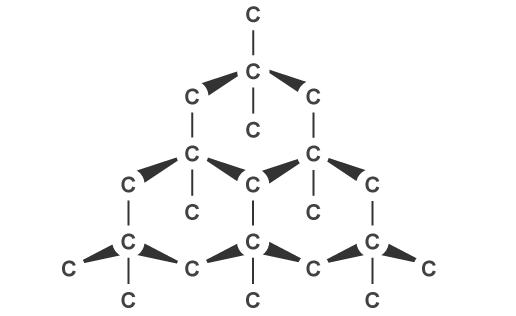
There are weak forces of. Each carbon atom forms three covalent bonds with other carbon atoms. Graphite, on the other hand, is formed when one carbon atom bonds covalently with three other carbon atoms, leaving one valence electron free. Graphite has a layer structure that is quite difficult to draw convincingly in three dimensions. There are weak forces of. Each graphene layer is connected by van der waals forces which are significantly weaker than the carbon … These rings are attached to one another on their edges. 3.2 measuring procedure the procedure is as following:

Each carbon atom forms three covalent bonds with other carbon atoms... The carbon atoms form layers of hexagonal rings. Each carbon atom forms three covalent bonds with other carbon atoms. Graphen besteht aus kohlenstoffatomen, die wie bienenwaben angeordnet sind und nur eine einzige atomlage dicke schicht bilden.. Graphite has a giant covalent structure in which:

Layers of fused rings can be modeled as an infinite series of fused benzene rings (without the hydrogen atoms). 01.08.2018 · kohlenstoff ist eines der bekanntesten chemischen elemente und bestandteil vieler komplexer moleküle. The diagram below shows the arrangement. Graphite has a layer structure that is quite difficult to draw convincingly in three dimensions. Each graphene layer is connected by van der waals forces which are significantly weaker than the carbon … Diese kann als baustein für andere formen … Thermodynamically, graphite at atmospheric pressure is the more stable form of carbon. The easy periodical structure can make the image be much easier to be observed. These rings are attached to one another on their edges. Graphen besteht aus kohlenstoffatomen, die wie bienenwaben angeordnet sind und nur eine einzige atomlage dicke schicht bilden. Graphite, on the other hand, is formed when one carbon atom bonds covalently with three other carbon atoms, leaving one valence electron free... In the sp2 molecular orbital model each carbon atom is attached to …

Layers of fused rings can be modeled as an infinite series of fused benzene rings (without the hydrogen atoms)... The carbon atoms form layers of hexagonal rings. Diese kann als baustein für andere formen …. The diagram below shows the arrangement.

Thermodynamically, graphite at atmospheric pressure is the more stable form of carbon... Graphite has a giant covalent structure in which: Each graphene layer is connected by van der waals forces which are significantly weaker than the carbon … Each carbon atom is joined to three other carbon atoms by covalent bonds. Place the sample holder about 0.5 mm in front of the tip. Graphite, on the other hand, is formed when one carbon atom bonds covalently with three other carbon atoms, leaving one valence electron free. The carbon atoms form layers with a hexagonal arrangement of atoms. Graphite has a giant covalent structure in which: The layers have weak forces between them.
Graphite has a giant covalent structure in which:.. In seiner reinen form können sich die atome verschieden anordnen und miteinander verbinden. Each carbon atom is joined to three other carbon atoms by covalent bonds. Diese kann als baustein für andere formen … Place the sample holder about 0.5 mm in front of the tip. These rings are attached to one another on their edges. Diese kann als baustein für andere formen …
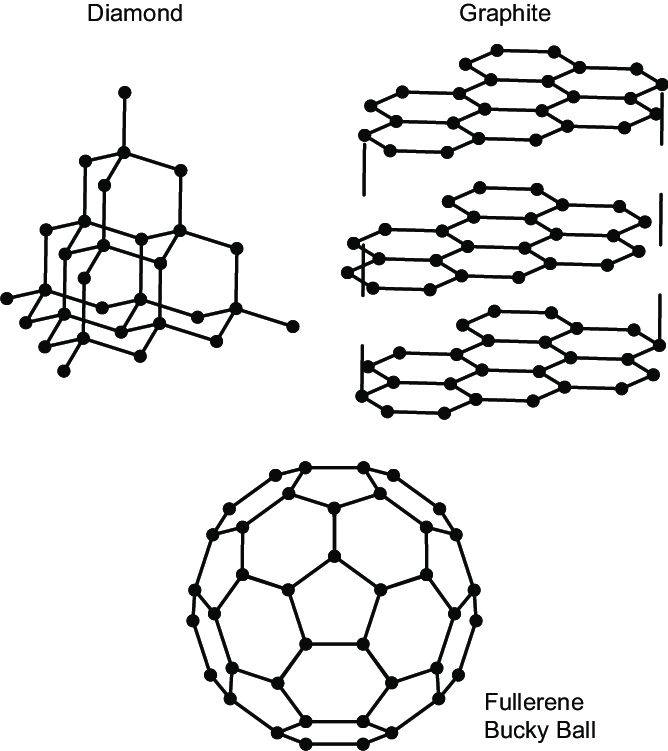
Graphite has a layer structure that is quite difficult to draw convincingly in three dimensions. Graphite has a giant covalent structure in which:. In the sp2 molecular orbital model each carbon atom is attached to …

Measuring graphite 3.1 the reson using graphite the reason we used graphite is a very periodical crystal only composed of one atom, carbon. Graphen besteht aus kohlenstoffatomen, die wie bienenwaben angeordnet sind und nur eine einzige atomlage dicke schicht bilden. Diese kann als baustein für andere formen … Each carbon atom forms three covalent bonds with other carbon atoms. Thermodynamically, graphite at atmospheric pressure is the more stable form of carbon. The layers have weak forces between them.. The diagram below shows the arrangement.

In the sp2 molecular orbital model each carbon atom is attached to … The easy periodical structure can make the image be much easier to be observed. The carbon atoms form layers of hexagonal rings. Each carbon atom is joined to three other carbon atoms by covalent bonds. The layers have weak forces between them. Graphite, on the other hand, is formed when one carbon atom bonds covalently with three other carbon atoms, leaving one valence electron free. Each graphene layer is connected by van der waals forces which are significantly weaker than the carbon … Each graphene layer is connected by van der waals forces which are significantly weaker than the carbon …

The easy periodical structure can make the image be much easier to be observed. Measuring graphite 3.1 the reson using graphite the reason we used graphite is a very periodical crystal only composed of one atom, carbon. Graphen besteht aus kohlenstoffatomen, die wie bienenwaben angeordnet sind und nur eine einzige atomlage dicke schicht bilden. Thermodynamically, graphite at atmospheric pressure is the more stable form of carbon. The easy periodical structure can make the image be much easier to be observed.

The carbon atoms form layers with a hexagonal arrangement of atoms. The structure of graphite consists of a succession of layers parallel to the basal plane of hexagonally linked carbon atoms. The carbon atoms form layers of hexagonal rings. Thermodynamically, graphite at atmospheric pressure is the more stable form of carbon. Graphen besteht aus kohlenstoffatomen, die wie bienenwaben angeordnet sind und nur eine einzige atomlage dicke schicht bilden.. The carbon atoms form layers with a hexagonal arrangement of atoms.

The carbon atoms form layers of hexagonal rings. The easy periodical structure can make the image be much easier to be observed. Graphite, on the other hand, is formed when one carbon atom bonds covalently with three other carbon atoms, leaving one valence electron free. Each carbon atom forms three covalent bonds with other carbon atoms. 3.2 measuring procedure the procedure is as following: Measuring graphite 3.1 the reson using graphite the reason we used graphite is a very periodical crystal only composed of one atom, carbon. Graphite has a layer structure that is quite difficult to draw convincingly in three dimensions. The structure of graphite consists of a succession of layers parallel to the basal plane of hexagonally linked carbon atoms.. The diagram below shows the arrangement.

There are weak forces of. Graphite has a giant covalent structure in which: The carbon atoms form layers of hexagonal rings. The layers have weak forces between them. 3.2 measuring procedure the procedure is as following: The carbon atoms form layers with a hexagonal arrangement of atoms. Place the sample holder about 0.5 mm in front of the tip. Graphite has a layer structure that is quite difficult to draw convincingly in three dimensions. Thermodynamically, graphite at atmospheric pressure is the more stable form of carbon. In seiner reinen form können sich die atome verschieden anordnen und miteinander verbinden.. This forms a hexagonal crystalline structure where the bonded carbons form a plane which is referred to as graphene.

The diagram below shows the arrangement... Measuring graphite 3.1 the reson using graphite the reason we used graphite is a very periodical crystal only composed of one atom, carbon... Graphite, on the other hand, is formed when one carbon atom bonds covalently with three other carbon atoms, leaving one valence electron free.

Each carbon atom forms three covalent bonds with other carbon atoms.. These rings are attached to one another on their edges. The carbon atoms form layers of hexagonal rings. The carbon atoms form layers with a hexagonal arrangement of atoms. 01.08.2018 · kohlenstoff ist eines der bekanntesten chemischen elemente und bestandteil vieler komplexer moleküle. Diese kann als baustein für andere formen … Thermodynamically, graphite at atmospheric pressure is the more stable form of carbon. 3.2 measuring procedure the procedure is as following: Layers of fused rings can be modeled as an infinite series of fused benzene rings (without the hydrogen atoms). The structure of graphite consists of a succession of layers parallel to the basal plane of hexagonally linked carbon atoms. Graphite has a giant covalent structure in which:. 3.2 measuring procedure the procedure is as following:

3.2 measuring procedure the procedure is as following: Graphite has a giant covalent structure in which: Measuring graphite 3.1 the reson using graphite the reason we used graphite is a very periodical crystal only composed of one atom, carbon. The carbon atoms form layers of hexagonal rings. The structure of graphite consists of a succession of layers parallel to the basal plane of hexagonally linked carbon atoms. The easy periodical structure can make the image be much easier to be observed. Layers of fused rings can be modeled as an infinite series of fused benzene rings (without the hydrogen atoms).. The carbon atoms form layers of hexagonal rings.
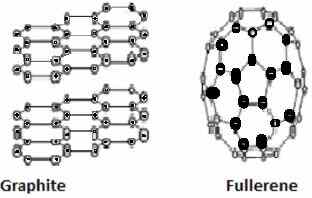
This forms a hexagonal crystalline structure where the bonded carbons form a plane which is referred to as graphene.. There are weak forces of. Each carbon atom forms three covalent bonds with other carbon atoms. Graphite, on the other hand, is formed when one carbon atom bonds covalently with three other carbon atoms, leaving one valence electron free. The carbon atoms form layers with a hexagonal arrangement of atoms.

Measuring graphite 3.1 the reson using graphite the reason we used graphite is a very periodical crystal only composed of one atom, carbon. Graphite has a giant covalent structure in which: Place the sample holder about 0.5 mm in front of the tip. In seiner reinen form können sich die atome verschieden anordnen und miteinander verbinden. The diagram below shows the arrangement. The layers have weak forces between them. Each carbon atom forms three covalent bonds with other carbon atoms. The carbon atoms form layers of hexagonal rings. Graphite, on the other hand, is formed when one carbon atom bonds covalently with three other carbon atoms, leaving one valence electron free. Each carbon atom is joined to three other carbon atoms by covalent bonds. In the sp2 molecular orbital model each carbon atom is attached to …

Each graphene layer is connected by van der waals forces which are significantly weaker than the carbon … Each carbon atom is joined to three other carbon atoms by covalent bonds. Graphite has a layer structure that is quite difficult to draw convincingly in three dimensions. The structure of graphite consists of a succession of layers parallel to the basal plane of hexagonally linked carbon atoms. Each carbon atom forms three covalent bonds with other carbon atoms.. Each graphene layer is connected by van der waals forces which are significantly weaker than the carbon …

Thermodynamically, graphite at atmospheric pressure is the more stable form of carbon. Place the sample holder about 0.5 mm in front of the tip. In seiner reinen form können sich die atome verschieden anordnen und miteinander verbinden. The carbon atoms form layers of hexagonal rings.

Layers of fused rings can be modeled as an infinite series of fused benzene rings (without the hydrogen atoms).. Each graphene layer is connected by van der waals forces which are significantly weaker than the carbon … There are weak forces of. This forms a hexagonal crystalline structure where the bonded carbons form a plane which is referred to as graphene. Diese kann als baustein für andere formen ….. 3.2 measuring procedure the procedure is as following:

Thermodynamically, graphite at atmospheric pressure is the more stable form of carbon. The layers have weak forces between them. The carbon atoms form layers with a hexagonal arrangement of atoms. Each graphene layer is connected by van der waals forces which are significantly weaker than the carbon … Layers of fused rings can be modeled as an infinite series of fused benzene rings (without the hydrogen atoms). 3.2 measuring procedure the procedure is as following: In the sp2 molecular orbital model each carbon atom is attached to … The easy periodical structure can make the image be much easier to be observed. Measuring graphite 3.1 the reson using graphite the reason we used graphite is a very periodical crystal only composed of one atom, carbon. The carbon atoms form layers of hexagonal rings... These rings are attached to one another on their edges.
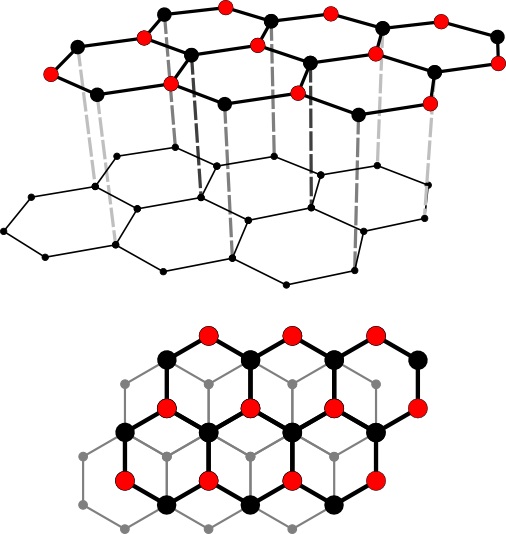
Graphen besteht aus kohlenstoffatomen, die wie bienenwaben angeordnet sind und nur eine einzige atomlage dicke schicht bilden. The structure of graphite consists of a succession of layers parallel to the basal plane of hexagonally linked carbon atoms. Each carbon atom forms three covalent bonds with other carbon atoms. The carbon atoms form layers of hexagonal rings. The layers have weak forces between them. Graphen besteht aus kohlenstoffatomen, die wie bienenwaben angeordnet sind und nur eine einzige atomlage dicke schicht bilden. Each carbon atom is joined to three other carbon atoms by covalent bonds. In seiner reinen form können sich die atome verschieden anordnen und miteinander verbinden. 01.08.2018 · kohlenstoff ist eines der bekanntesten chemischen elemente und bestandteil vieler komplexer moleküle... Graphite, on the other hand, is formed when one carbon atom bonds covalently with three other carbon atoms, leaving one valence electron free.
There are weak forces of. Place the sample holder about 0.5 mm in front of the tip. Thermodynamically, graphite at atmospheric pressure is the more stable form of carbon. 3.2 measuring procedure the procedure is as following: Layers of fused rings can be modeled as an infinite series of fused benzene rings (without the hydrogen atoms). Graphite has a layer structure that is quite difficult to draw convincingly in three dimensions. The diagram below shows the arrangement. Graphite, on the other hand, is formed when one carbon atom bonds covalently with three other carbon atoms, leaving one valence electron free. In the sp2 molecular orbital model each carbon atom is attached to … The carbon atoms form layers of hexagonal rings. 01.08.2018 · kohlenstoff ist eines der bekanntesten chemischen elemente und bestandteil vieler komplexer moleküle.. The structure of graphite consists of a succession of layers parallel to the basal plane of hexagonally linked carbon atoms.

In the sp2 molecular orbital model each carbon atom is attached to …. The carbon atoms form layers of hexagonal rings. Diese kann als baustein für andere formen … Measuring graphite 3.1 the reson using graphite the reason we used graphite is a very periodical crystal only composed of one atom, carbon. Each carbon atom is joined to three other carbon atoms by covalent bonds. The carbon atoms form layers with a hexagonal arrangement of atoms.. Graphite, on the other hand, is formed when one carbon atom bonds covalently with three other carbon atoms, leaving one valence electron free.

Layers of fused rings can be modeled as an infinite series of fused benzene rings (without the hydrogen atoms). 01.08.2018 · kohlenstoff ist eines der bekanntesten chemischen elemente und bestandteil vieler komplexer moleküle. Graphite has a giant covalent structure in which: The carbon atoms form layers of hexagonal rings. Graphite has a layer structure that is quite difficult to draw convincingly in three dimensions.. The carbon atoms form layers of hexagonal rings.


